
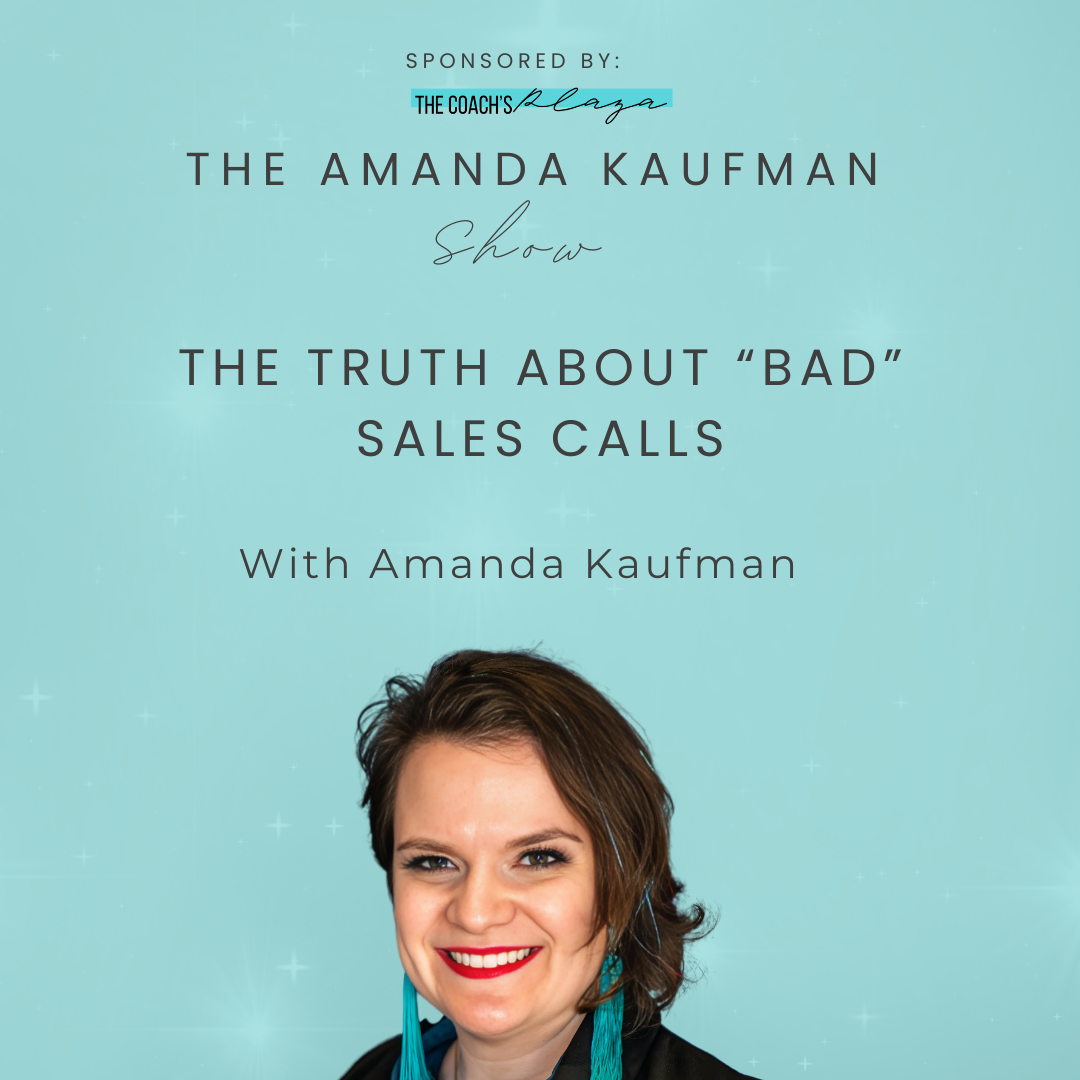
The Truth About “Bad” Sales Calls
The Truth About “Bad” Sales Calls
Let’s talk about the sales call you think you messed up.
You know the one. You hang up and immediately start replaying everything. You said the wrong thing. You weren’t prepared enough. You missed something. You lost the sale.
And just like that, you decide it didn’t go well.
But here’s the truth. Most of the time, you didn’t mess it up. You just experienced what real sales actually looks like.
Sales Is Messy. Not Mechanical
A lot of people learn sales from a distance.
You watch the trainings. You take notes. You learn the scripts. You memorize the steps. Everything feels clean, structured, and predictable.
Then you get into a real conversation.
And it’s none of those things.
The person you’re talking to has emotions, timing issues, doubts, distractions, and their own expectations. You have your own emotions layered on top of that. The conversation moves in unexpected directions. Things don’t land perfectly.
That doesn’t mean something went wrong.
It means you’re no longer learning in theory. You’re in reality now.
The Gap Between Knowledge and Wisdom
There’s a difference between knowing what to do and knowing how to do it in the moment.
That difference is experience.
You can understand every step of a sales process and still feel completely thrown off when you’re actually in the conversation. That’s because your brain can only process so much information at once.
When you’re new, everything feels like it matters. Every word, every reaction, every pause.
Over time, with repetition, you start to see patterns. You start to recognize what actually matters and what doesn’t.
That’s where confidence comes from. Not from getting it perfect, but from understanding it more deeply.
Why You Think You Failed
One of the biggest traps I see is this idea that a sales conversation should be smooth and perfectly executed.
So when it’s not, you assume you did something wrong.
But most sales conversations are a little bumpy. The timing might be off. The energy might be off. The other person might not be ready.
There are so many variables that have nothing to do with your ability.
And yet, you take full responsibility for the outcome.
Not in a productive way, but in a way that turns into self-criticism.
The Self-Punishment Loop
This is where things start to hurt your progress.
You notice everything you could have done better. You replay the conversation. You feel uncomfortable. You label it as failure.
But then you don’t actually change anything.
You go into the next conversation carrying that same pressure and that same narrative.
That’s not growth. That’s a self-punishment loop.
Awareness only helps you if it leads to adjustment.
If it doesn’t, you’re just reinforcing the idea that every sales call is something to survive instead of something to learn from.
What Actually Moves the Needle
If you want to get better at sales, you have to shift what you focus on.
Instead of obsessing over every detail, ask yourself a simpler question.
Did I do the things that actually matter?
Did you show up?
Did you have the conversation?
Did you ask questions?
Did you listen?
Did you make the offer?
Those are the needle-moving actions.
Everything else is refinement. And refinement comes with repetition.
Reps Create Clarity
You don’t need more information. You need more exposure.
Every conversation gives you data. Every interaction shows you something new. Every attempt builds your understanding.
At first, it feels overwhelming because your brain is trying to process everything at once.
But over time, things start to click.
You begin to see what matters. You start to trust yourself more. You stop reacting emotionally to every little moment.
That’s what builds real confidence.
Curiosity vs Anxiety
There’s one decision that will change how fast you improve.
How you show up to the process.
If you approach each conversation with anxiety, you’re going to be on high alert. You’ll look for what’s wrong. You’ll judge yourself harshly. You’ll miss what’s actually happening.
If you approach it with curiosity, everything shifts.
You start asking better questions. You stay more present. You learn faster because you’re not trying to protect yourself from discomfort.
You’re using the experience to grow.
People Don’t Always Buy. And That’s Normal
Not every sales conversation ends in a yes.
That’s not a reflection of your ability.
People explore options all the time. They get curious before they commit. They want things they don’t fully believe they can have yet.
Sometimes they’re not ready. Sometimes they need more time. Sometimes it’s just not the right fit.
That’s part of the process.
If you expect every conversation to convert, you’re going to feel like you’re failing constantly.
If you understand that some conversations are simply part of the journey, you stay in the game longer.
This Is a Skill, Not a Personality Trait
Sales is a skill.
Marketing is a skill.
Emotional regulation is a skill.
None of this is about being naturally good or bad at it.
It’s about repetition, awareness, and adjustment over time.
The more you engage, the more you learn. The more you learn, the better your decisions become.
That’s how results improve.
Keep Going
If you’re in the middle of this right now, feeling like you’re not getting it quite right, that’s okay.
You’re not behind. You’re in it.
Keep showing up. Keep having conversations. Keep learning from what actually happens, not what you think should have happened.
You don’t need perfect execution.
You need consistency, curiosity, and the willingness to keep going.
That’s how this works.
Chapter List:
00:00 Why Sales Calls Don’t Go to Plan
02:00 Business Is a Contact Sport
04:00 Why Sales Feels Messy
06:30 “I Messed Up the Sale” Mindset
08:30 Anxiety and Overthinking
10:30 What Actually Matters in Sales
12:45 The Self-Punishment Cycle
14:45 Why People Don’t Buy
16:30 Sales Is a Skill
18:30 Keep Going
Complete Transcript:
Amanda Kaufman (00:00)
There is a difference, right, between having the knowledge of what to do and having the wisdom of how to apply that knowledge.
Hey, hey, Amanda here, and I wanna talk to you about how to recover when you are having sales conversations and it doesn't go to plan. My name is Amanda Kaufman, and I've been helping coaches and experts to acquire more clients, more cleanly using systems. like, if you were to just figure out what's in this brain knocking around a lot.
It's a lot about relationships, it's a lot about systems. I like putting those two things together because after three million dollars of sales in my own personal brand, I've got to tell you, this has been one hell of a climb, one very steep climb to get to where I have gotten to with my business. And of course, always dissatisfied, like the typical.
typical performer, but I love making content that helps you to navigate some really normal situations that probably feel super foreign.
especially when it comes to growing a business that you're super proud of and it's profitable and it supports your lifestyle and all those good things. So let's talk about it. A lot of people, know, when they go to build a business, they're learning a lot of things from afar. So what I mean by that is like we go to seminars, we take webinars, we watch videos like this one. And we just, learn from afar. We do a lot of consumption, we make a lot of notes, we take it back home, we're in our home office. Hello, I'm in my home office.
And the thing is is that it doesn't get banged up against reality until it does and when it does It's like a whole different ballgame. So something I'm always teaching my clients. It's like hey business is a contact sport You're gonna make contact with that record button. You're gonna make contact with people over Digital channels like Facebook and LinkedIn you're gonna make contact through conversations and phone calls like like that's the whole
thing because at the end of the day, especially for an expert based business, it is a relationship based business. So you're going to be earning rapport and trust with strangers to then hopefully progress your relationship to not strangers anymore. you know, ideally have enough of those people move forward into becoming a customer, a client that you actually have a viable business. But like I said, we learned all these things from a distance.
So
when we're learning from a distance, we're going to learn through frameworks. We're going to get three steps for this. We're going to get five steps for that. We're going to get the scripts. We're going to get the hypothesis. We're going to get the AI prompt that makes it all easy. then again, there comes a time in everyone's business where they're going to encounter and make contact with reality. Well, reality is so messy. I was going to say sometimes messy? No, always.
Messy. It's messy, you know, because the framework doesn't account for all of the little bits and bobs in between. I heard the Hormozis talk about this recently and I loved it. It was this idea that there are skills, right? And then there's micro skills. And when it comes to sales and selling and fulfillment, your micro skills play a massive role. It's not about whether you can repeat or regurgitate information.
It's about how do you deliver ideas? What questions are you asking? How are you packaging up the information? How are you interacting with people out in the wild?
And like I said, reality is gritty, it's dirty. First of all, dealing with different personalities. You're gonna encounter personalities that are very bold, you're gonna encounter personalities that are very introverted, you're gonna encounter people who have different levels of education and exposure, you're gonna encounter people who have very different value systems and very different preferences. And it's impossible to put all of those little nitty gritty
details into the framework because the whole point of the framework is to rise above all the nitty-gritty details and try to teach you the signal and keep it separate from the noise. But when you go to do the darn thing, boy is it noisy. You know, it's so noisy out there and that's for everything in your business. Whether we're talking about posting to social media for the first time, starting your podcast, speaking for the first time, making sales, actually delivering for the first time.
You're going to encounter little things, but like thousands of little things that you didn't previously have preparation for. And my friend, that is how you earn a little something I like to call wisdom. There is a difference, right, between having the knowledge of what to do and having the wisdom of how to apply that knowledge.
And I would say that wisdom is a really nice roller-upper word for being able to
identify the patterns and the details. So recently I was coaching someone around how they were approaching sales and they felt that they had been rejected. They felt that they totally messed up the interaction and that they for sure had lost the sale. And as we went deeper into the conversation it became very clear that my client had the idea that they were to have won perfectly
packaged conversation that would lead to a close a big yes and The reality was that it was kind of bumpy, you know the the emotional experience of my client on that day the Opportunity coming in when he wasn't really quite ready for it the expectations of the other person all of these things basically flooded my clients awareness and And made him believe that he had actually done something wrong and I said, you know
When we walked through the whole process together, we realized he did nothing wrong. He did great. Like, there were for sure opportunities for his preparation. There were opportunities for his execution. But like, 80-20, he did like most of everything just fine. You know, absolutely objectively correct.
And it made me just think about, you know, the first couple years of doing sales in my own business, I was so convinced that I was doing everything wrong and that somebody else always had a better way that they were gonna do it and that I was never gonna learn those better ways or I was never gonna be able to be those better ways. And it was a nightmare, because I was just living in this anxiety for a long time.
What I've come to realize when it comes to selling and sales and content and marketing and messaging and all of that is it's difficult to understand all of the details, but not impossible. And just because you don't understand right now today what is exactly going on because our brains can only process so much information at a time doesn't mean you're never going to understand it. The more reps that you get, the more repetition that you go through,
the more opportunities, the more at bats that you get, the more information you're going to gain exposure to. And the question is, like, are you going to approach those interactions with curiosity or are you going to approach those interactions with trepidation and anxiety? And here's the thing, this is wild, but if your emotional experience that you're having is really ratcheted up, it's really anxious,
It's really, you know, fight, flight or freezy.
your ability to remain calm and to see the situation for what it is starts to disappear because your brain starts going for like what's dangerous about the situation. And if you're somebody who's really committed to high performance and high achievement, I guarantee you're going to find things that you could do better. Like this very video, I was like compelled. I'm going to start talking. I'm going to go for the thing. I hit record and I'm like, shoot. I don't have makeup on, you know, and
Like there's a part of me that is like, got to stop doing that girl. I mean, like you look a little tired. You look a little 41. And the truth is that I also have the inspiration and the energy right now to hit that record. If I insert a 20 minute preparation to make sure my face is not offensive to you, then I may not have the same level of energy for sitting down and simply hitting record. So I share all of this with you because your brain
is going to pull in all these data points and especially if you find yourself on social media a lot or using AI a lot in a given day, there's only so much your brain is going to be able to actually absorb in terms of that data and that information. What will serve you so, so, so much is to ask yourself what is the needle moving action here and did I honor that? Did I honor what the most important steps were in the thing that I
wanted to do or am I obsessing over those micro skills and am I obsessing over those micro data points and all these things that are making me uncomfortable?
The thing is, your comfort is gonna come from the repetition, the exposure to all of those things and to allow your mind to absorb, to process what's actually going on so that you can make the next best step forward. I am a big fan of teaching from framework. I am a big fan of teaching steps and process and details because it helps people to be able to start to replicate and then once you can accurately replicate,
then you can start to expand your understanding and gain your own wisdom about how things are supposed to go. I think what a lot of people do is they go rogue, they're they're honoring their independence, they're honoring their freedom, and hey go you if that's you, that's me too. But you can end up like getting very lost and putting a lot of emphasis on things that don't matter.
and putting not enough emphasis on the things that really and truly do matter to achieve your goals. And whatever that case may be, whether you're overemphasizing or underemphasizing, your performance is going to be impacted negatively if you are not giving enough energy to the things that do matter and you're giving too much energy to the things that don't matter. Now, here's the real trick about this whole mattering thing.
What matters to you? This is really a values question. What do you value? So coming back to the experience of like, hey, I think I messed up that interaction. I messed up that sales call. I messed up that follow-up. I messed up that follow-through. I said the wrong thing. I was dumb. I didn't prepare the way that I could have prepared.
The recognition of all those data points is really, powerful, but it's what you do with it that really matters. If you're recognizing all of those mistakes, all those issues, those missteps, but you're not adjusting your behavior, you're not adjusting your actions or decisions that you're making as a result of that recognition, you may be engaged in a self-punishment cycle. And I see this a lot. I see a lot of people, like when they finally make contact with
their prospect or somebody who's interested in testing out the business or something like that because we're on such high alert of like, my God, what if I fail?
It can lead you to not recognizing where you are succeeding and where you are doing the requisite thing. And if you aren't careful, it's that panic and the freak out that's going to be the thing that stops you from progressing apart from anything else. You know, there is no one single right answer for how to be successful, but there very much is a pattern to business. There's a pattern to
⁓
to the workflows and the activities that you do that are more likely to achieve the result. And if one of your patterns is to kind of say like, I can't do this or I'm freaking out, then that's a pattern worth addressing because if we can have a different response, if we can recognize that we're not afraid, we're simply uncomfortable.
And if we can explore like, huh, like what's making this uncomfortable? Well, it's uncomfortable because I've never had this conversation before. It's uncomfortable because no one's ever actually told me no before. It's uncomfortable because no one's no one's criticized my work before. Right.
Being a business owner is wild because like the more that you really put yourself out there, especially with a personal brand, the more you realize that people don't understand the risk that you're taking with doing it. And the more you realize that there's a lot of bored people that will say some pretty harsh things and they're gonna do it because they are bored and you've put your content out there to be reacted to. And when you realize like,
Like that individual is commenting on your thing because they really don't have a lot else going on You start feeling far more permission to like publish and to put things out there because you just accept the reality that like some people aren't gonna like it and some people are gonna have a problem with it and some people are gonna you know wish that you did something else differently and it's like You okay, right and when it comes to the sales conversation
People
will shop for things that they want, but they don't believe they can have all the time. It doesn't mean that you screwed up the sales conversation. It means that they were curious, they were interested. And by the way, if you don't have a process for how to sell, you're gonna learn the process that everybody uses to not buy, right? Because you've probably heard like people shop, but people don't buy like all the time, all the time.
Bye.
You do it. I do it. Right? We explore possibilities before we make commitments to those possibilities. And so if someone is saying no in a sales call and you feel bad because you're like, my God, I wasted my time or my God, I wasted their time or my God, I suck at sales. Like if that's your narrative, then you're going to feel pretty heavy and sad about building a business because the truth is
that people do shop and you know if you don't have any kind of filtering that happens before the consult
where you offer marketing, that you let people see what you're about, that you let people hear your perspectives on things. you don't have content that does that, then yeah, you're gonna get a lot of people who are curious and they're gonna have to find out all that information from you personally. Because you've built a business that is 100 % based on your connected conversations with people. You haven't architected a marketing experience that answers a lot of the questions that someone might have, so then they need
to speak to you in order to make a decision about buying. Okay, so I think what I was really wanting to say here is sales is a skill, marketing is a skill, emotional regulation is a skill.
Identifying something that's truly valuable to another person is a skill and so therefore, you know business successful business ownership is really about developing and building the skills that are going to allow you to do it Don't take every action you take So seriously is to like mean something about who you are or mean something about your future or mean something about your intelligence or whatever the
story is that you're telling yourself about the results that you're getting. Because business is really and truly it's black and white. It's steps that people take and don't take and it's the frequency with which they take it or don't take it and your proficiency as a business owner is predicated on your ability to understand the causes, the effects and to make decisions that improve the likelihood of your success. And of course the struggle is guaranteed but
your success is not. And I think that that's one of the scariest hardest things about...
I was going to say entrepreneurship, but I gotta tell you, that's life. That's life too. Because even if you're remaining in a job situation, look at the disruption that's being caused by AI. No one is safe indefinitely in life, period. So then the question becomes, if you're walking this earth,
Would you like to feel like you're at the effect of the rug being yanked out from under you, or would you like to keep improving those skills and keep approaching with curiosity and keep developing yourself and keep developing how you grow? To me, it's like a quality of life question. I personally feel a whole lot better cultivating skill set and learning.
from actions, from mistakes, from those around me and what's going on. I would rather stay fully engaged because the opposite is very depressing.
All right, so keep going, keep sparking conversations, keep having connections with people, stop taking things so personally, stop moving so slowly, and keep going. You've got this. And if you want my help, make sure you check out the links around this video. I run a group program called the Experts Network. It's a community for experts and coaches who are ready to stop hacking at this business thing. They're ready to go pro. They wanna have a great offer. They wanna have great content. They wanna have great connections.
They want to build great communities and they want to do it all to have a sense of independence and freedom in their own lives. So send me the word expert on Instagram or click around this video and you can go check that out if you're ready to talk about that. And if you're not, well, watch this other video. We'll see you soon.